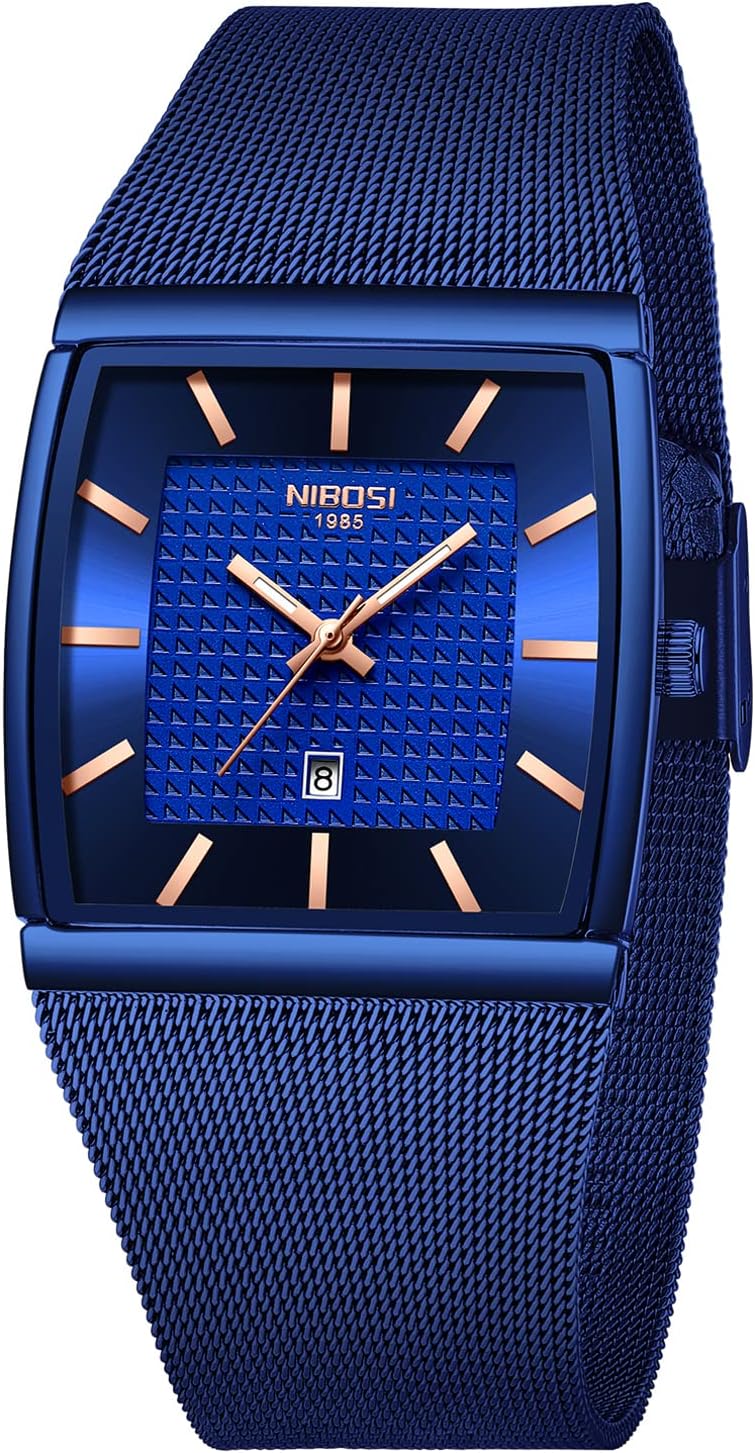
We put timeless Swiss elegance head-to-head with budget-savvy flair — which watch will truly earn a place on our wrist and our wallet?
Our Pick: Omega De Ville vs OLEVS — Style & Value
We compare the classic Omega De Ville and the affordable OLEVS to help you choose. We evaluate DESIGN, movement, comfort, features, and ownership cost. Our clear, practical guidance matches each watch’s style and value to your needs and budget today.
Dress Watch

We find this to be a finely crafted dress watch with a refined profile and dependable automatic performance. It’s ideal for those seeking Swiss craftsmanship and lasting style, although the price and modest water resistance reduce its everyday practicality for some buyers.
Everyday Value
We see this as a budget-friendly dress watch that delivers solid looks and readability for the price. It’s a sensible choice for casual wear or gifting, but strap quality and long-term durability are areas where compromises are evident.
Omega De Ville
OLEVS Leather Watch
Omega De Ville
OLEVS Leather Watch
Omega De Ville
OLEVS Leather Watch
Design & Aesthetics — Classic Luxury vs Affordable Elegance
Dial, case and finishing
The Omega De Ville presents a deep sunburst blue dial, slim baton indices and a finely brushed-and-polished 39.5 mm stainless case that reads as restrained luxury. The 10 mm thickness and hidden fold-over clasp keep the profile elegant on dress shirts. Its finishing—milled edges, applied markers and subtle dial texture—signals quality at a glance.
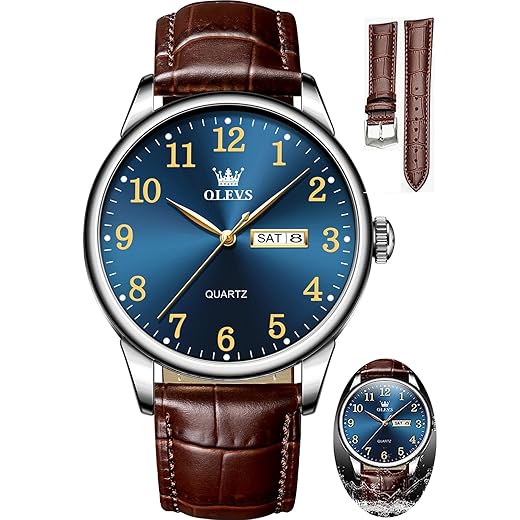
The OLEVS opts for a straightforward, high-contrast layout: large Arabic or stick markers, a 40 mm case, and clear date window. The finish is clean but plainly executed—good for visibility and everyday wear, not for close-up scrutiny.
Strap, colorway and wearability
Omega ships on a matching steel bracelet (silver tone) that complements the blue dial and elevates the watch’s formal presence. It sits weightily and confidently on the wrist.
The OLEVS comes in brown or black leather (or silicone variants in some listings). The band is lightweight and comfortable immediately, but shows wear sooner. Its brown/black combos make it flexible for casual-to-business looks.
How they read on the wrist and what they say about you
Movement, Build Quality & Durability — Precision and Longevity
Movement & accuracy
We compare a true mechanical tradition versus a budget-friendly quartz workhorse. The Omega De Ville uses an automatic (self-winding) movement: a complex, purely mechanical system that gives a smooth seconds sweep and excellent regulation when serviced. It rewards ownership with horological character but needs routine servicing and occasional regulation.
The OLEVS is built around an inexpensive quartz movement (battery-powered). Quartz is typically more accurate day-to-day, requires only battery changes every 1–3 years, and is cheaper to maintain — but it lacks the craftsmanship and repairability of a mechanical caliber.
Case, crystal and water resistance
Omega’s 39.5 mm stainless case shows precise machining and better corrosion resistance; manufacturers at this tier usually fit sapphire crystal, which resists scratching. The listed 30 m (100 ft) rating suits splashes and rain, not swimming.
OLEVS uses a high-polish, entry-level stainless case and most likely a mineral crystal or low-cost hardened glass. It also claims ~30 m resistance; in practice that protects against washing hands and light rain but not prolonged submersion. The OLEVS leather band is comfortable but will show wear far sooner than Omega’s bracelet.
Maintenance, longevity & everyday reliability
Overall, Omega demands more care and investment but delivers long-term durability and heritage; OLEVS delivers straightforward, low-cost reliability for everyday use.
Features, Comfort & Everyday Use — Practicality Matters
Case size, thickness & wrist feel
We find both watches sit in the same practical size range: the Omega is 39.5 × 10 mm, the OLEVS is about 40 × 10 mm. The Omega’s solid stainless bracelet gives a noticeably substantial, premium wrist presence; the OLEVS is very light (~42 g) and barely there — great if you prefer minimal weight.
Legibility & complications
Both give clear time reading and a date at 3 o’clock. The Omega’s applied indices and refined finishing improve contrast and make the dial feel more legible in varied light. The OLEVS uses Arabic numerals and a large face, so it’s immediately readable at a glance.
Strap comfort & interchangeability
The Omega’s hidden fold-over clasp on a steel bracelet is comfortable and secure but feels heavier and needs proper tools for strap changes. The OLEVS leather strap is soft out of the box and easy to size; it will show wear faster. Both watches use common (~20 mm) widths, so swapping straps is straightforward — though aftermarket leather for the Omega should match the lug profile.
Everyday scenarios & ease of care
Routine care differs: Omega requires periodic servicing to maintain its automatic movement; OLEVS needs only occasional battery changes and strap care. Our takeaway: pick the Omega for presence and long-term ownership; pick the OLEVS for low-maintenance, day-to-day practicality.
Side-by-Side Feature Comparison

Value, Pricing & Ownership Costs — Which Gives More Bang for Your Buck?
Price gap and what it buys you
The price difference is stark: the Omega lists around $3,650; the OLEVS is about $40. For that premium the Omega delivers superior materials, finishing, an automatic caliber, and the intangible of a luxury name. The OLEVS gives an immediate, very low-cost way to own a dress-style watch that looks good on the wrist.
Resale potential and brand premium
We expect the Omega to hold meaningful resale value and desirability over time because of brand, movement, and finish. The OLEVS has virtually no secondary-market value — it’s a low-cost, fashion-forward purchase.
Warranty, after-sales and support
The Omega is backed by a manufacturer-authorized service network and a multi-year warranty typical of luxury brands, so repairs and genuine parts are available worldwide. The OLEVS generally relies on seller support or limited manufacturer warranty; repairs often mean replacement rather than an economical overhaul.
Long-term servicing and ownership costs
The Omega requires periodic servicing (commonly every 5–10 years) with authorized service costs that can amount to several hundred dollars or more depending on work. Its stainless bracelet and movement are built to last. The OLEVS quartz needs battery changes (cheap) and likely strap replacements every few years; long-term reliability is unpredictable but low-cost to replace.
Buying scenarios — match purchase to priorities
We recommend aligning your choice with whether you value long-term craftsmanship and resale (Omega) or immediate value and low ownership cost (OLEVS).
Final Verdict — Our Pick and Who Should Buy Which
We pick the Omega De Ville as our overall winner for build, movement, and long-term value; its refined automatic caliber beats the OLEVS in heritage and finish. The OLEVS wins for budget-conscious shoppers who want a stylish, reliable daily dress watch without the premium price.
Collectors should choose the Omega for investment and craftsmanship. Style-first buyers who want luxury presence choose Omega; if cost and practicality matter more, buy the OLEVS. Ready to upgrade your wristwear? Enjoy either choice with confidence.